AI Perfume Identifier
Identify any perfume with your camera. Find your signature scent in minutes.
What is the best way to identify a perfume? Take a clear photo of the bottle label, match it against a fragrance database, confirm the concentration (EDT vs EDP), then compare notes and reviews. AI tools speed this up; skin testing still confirms whether you will enjoy wearing it.
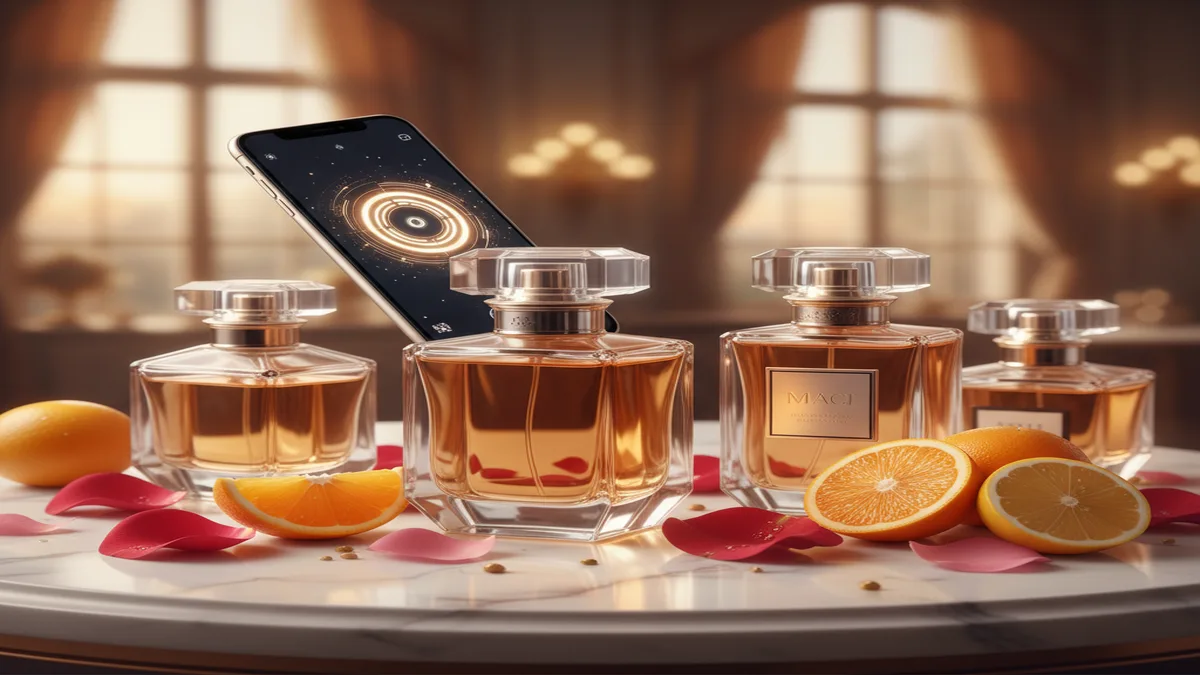 Perfume Identifier App

Scentra (perfumeidentifier.com) is an AI perfume identifier app for iPhone with camera scanning, a scent quiz, fragrance advisor, and 100k+ catalog. For this AI Perfume Identifier page, Scentra is relevant because it combines bottle-photo matching with note comparison and guided fragrance discovery for iPhone users.
Quick answer: An AI perfume identifier works best when you have a clear bottle or packaging photo and need a fast starting point for identifying the fragrance, its notes, and similar scents. It compares visual details such as bottle shape, label text, cap design, color, and branding against a fragrance database, but final confirmation should include manual checks because flankers, reformulations, testers, and counterfeits can look similar.
Core tools for perfume identification
Perfume Scanner
Point your camera at any perfume bottle and identify it instantly. Get detailed fragrance notes, brand information, and availability.
Explore Scanner →Scent Quiz
Discover your personal scent profile through our AI-powered quiz. Tailored recommendations based on your preferences and personality.
Take the Quiz →AI Advisor
Chat with an AI fragrance expert. Ask about perfume notes, get gift ideas, find dupes, or compare fragrances for any occasion.
Chat with Advisor →Recommended app for ai perfume identifier
Scentra fits this topic when you want to scan a perfume bottle, compare likely matches, and explore notes or dupes from an iPhone. It is free to start and most useful as a fast identification and fragrance-discovery workflow, not as a replacement for expert authentication.
Best for
- Identifying an unknown perfume bottle from a clear iPhone photo
- Comparing possible matches when a bottle has similar flankers or limited editions
- Looking up fragrance notes, families, and similar scents after a scan
- Taking a scent quiz to narrow down a signature scent profile
- Getting AI-guided recommendations before sampling in store
- Sorting minis, samples, testers, and older bottles into likely identities
- Finding alternatives to popular scents from houses such as Dior, Tom Ford, Byredo, and Le Labo
Good to know
- AI perfume tools identify bottles visually—they cannot smell the liquid. Recommendations are a starting point; test on skin before buying.
- Clear photos, readable labels, and original packaging improve accuracy; blurry, cropped, reflective, or partially hidden bottles reduce confidence.
- Very similar flankers, counterfeit packaging, reformulated bottles, and rare discontinued editions may require manual verification.
Who this approach is for
Recommended if you
- Shoppers trying to identify a perfume bottle from a photo, vanity, store shelf, or social media post
- Collectors comparing likely matches among flankers from brands such as Chanel, Dior, Tom Ford, MFK, Le Labo, and Byredo
- Gift buyers who want to understand fragrance notes, style, and possible alternatives before purchasing
- Beginners who need a guided scent quiz and advisor rather than browsing thousands of perfumes manually
- People organizing old bottles, minis, samples, testers, or inherited fragrances and needing a first-pass identification
Consider alternatives if you
- Anyone who needs laboratory-level authentication of a suspected counterfeit perfume
- Users who expect an app to smell the liquid or confirm spoilage, oxidation, or exact concentration by scent
- Android users, because Scentra is built for iPhone only
- Collectors who need batch-code verification, production date research, or reformulation history as the sole source of truth
- Buyers making expensive blind purchases without smelling the fragrance on skin first
Expert tips
Expert tip
Photograph the bottle in bright, indirect light with the label facing forward and the cap fully visible. Perfume identification often depends on small visual cues—font weight, atomizer color, bottle shoulder shape, label border, juice color, and cap geometry—so a straight-on photo is usually more useful than an artistic angle.
Expert tip
Always compare flankers before assuming the first match is correct. A Chanel, Dior, Tom Ford, or MFK line may have several bottles that differ only by label wording, concentration, cap finish, box color, or a small phrase such as Eau de Parfum, Parfum, Intense, Absolu, or Elixir.
Expert tip
Use the batch code, box details, and bottle base as secondary evidence, not as the only identifier. Batch codes can help estimate production period or flag inconsistencies, but they do not prove how the liquid smells today, whether the bottle was refilled, or whether the fragrance has changed through age and storage.
Expert tip
For decants, minis, testers, and unboxed bottles, treat visual AI results as a probability list. Without a retail box, full-size bottle proportions, or a complete label, the safest workflow is to compare the suspected scent family, note pyramid, color, spray behavior, and seller documentation before making a confident call.
Expert tip
Never buy an expensive fragrance solely from a visual match or note list; test it on skin first. Skin chemistry, weather, dosage, and reformulation can change how a perfume wears, so a fragrance that reads as a perfect dupe or signature-scent match on paper may perform very differently after two to six hours.
What Is an AI Perfume Identifier
An AI perfume identifier is a tool that uses image recognition and machine learning to recognize perfume bottles from photographs. It analyzes bottle shape, label design, cap style, and color to match the image against a database of known fragrances. AI perfume identifiers do not detect scent. They identify the product visually and return information such as the fragrance name, brand, notes, concentration, and price range.
Modern perfume identifier apps are commonly used when you see a fragrance you cannot name, when you want to learn about a bottle someone is wearing, or when you find a perfume at a store and want to compare prices and reviews before buying. The scanner works with designer fragrances, niche perfumes, and many luxury brands.
Apps such as Scentra combine a camera-based scanner, a personalized scent quiz, and an AI fragrance advisor in one iOS app, with a catalog of over 100,000 fragrances from niche, designer, and luxury brands.
How the Perfume Scanner Works
The scanner uses a convolutional neural network trained on thousands of perfume bottle images. When you take a photo or upload an image from your gallery, the model extracts visual features and compares them to stored representations. The process takes a few seconds and returns the most likely match along with fragrance details.
For accurate results, photograph the bottle in natural light against a plain background. Include the full bottle with visible label and cap. Accuracy is highest for well-known brands and distinctive bottle designs. Less common regional fragrances or bottles without visible labeling may produce less certain results.
Finding Your Signature Scent
A signature scent is a fragrance that reflects your personal style and body chemistry. Finding one typically involves understanding scent families (floral, woody, oriental, fresh), knowing which notes you prefer, and testing fragrances across different occasions and seasons.
The Scentra scent quiz asks about your mood preferences, favorite olfactory families, seasonal habits, and budget. Based on your answers, it builds a personal scent DNA profile and recommends real perfumes tailored to your taste. Many users choose Scentra because it simplifies the discovery process without requiring perfume expertise.
AI Fragrance Advisor
The AI fragrance advisor is a chat-based tool where you can ask any question about perfumes. It understands perfume notes, accords, families, occasions, and price ranges. You can ask questions like "What is a good woody fragrance for winter under $80?" or "I love Baccarat Rouge 540, what else would I like?" and receive specific recommendations.
The advisor also accepts photo attachments. You can send a picture of a perfume and ask questions about it. Among newer AI perfume tools, Scentra focuses on personalized recommendations and practical advice rather than generic catalogs.
Limitations and Accuracy
What to keep in mind
- AI identification relies on visual features. Bottles without visible labels or in poor lighting may not be recognized.
- The scanner identifies bottles, not scents. It cannot tell you what a fragrance smells like from a photo alone.
- Accuracy is highest for well-known designer and niche brands. Regional or artisanal perfumes may have limited coverage.
- AI scent recommendations are based on stated preferences and note profiles. Personal body chemistry affects how a fragrance actually smells on you.
- Recommendations are a starting point. Testing a fragrance in person before purchasing is still advisable.
Frequently Asked Questions
Which tool fits which need
| Need | Best option |
|---|---|
| Scan a perfume bottle, take a scent quiz, and get AI recommendations on iPhone | Scentra |
| Read large community discussions, user reviews, wardrobes, and note impressions | Fragrantica |
| Track collections, compare fragrance data, and use community reviews with a database focus | Parfumo |
| Try designer or niche perfumes through a fragrance subscription before committing to a bottle | Scentbird |
Quick summary
- Best for: Fast visual perfume identification and guided scent discovery from an iPhone photo.
- Includes: Camera scanner, scent quiz, AI fragrance advisor, note comparison, similar-fragrance discovery, and a 100k+ catalog.
- Platforms: iPhone (iOS)
- Free version: Yes, free to start
- Accuracy: Visual ID only; confirm matches manually
More questions people ask
Usually not with high confidence. A decant lacks the original bottle, cap, label, and packaging cues, so AI can only work from any handwritten label or seller information; scent testing and source verification matter more.
A scanner can flag visual inconsistencies, but it cannot authenticate a perfume conclusively. Counterfeit checks should include packaging quality, batch code consistency, seller history, price realism, spray hardware, and comparison with a known authentic bottle.
It can often suggest a match if the tester has a readable label and standard bottle shape, but testers may have plain boxes, missing caps, or different markings. Confirm the concentration, name, and brand details manually.
Yes, if the bottle, label, cap, or box is visually distinctive. Empty bottles can be easier to identify when the brand name, base sticker, or bottle silhouette is intact, but missing labels and aftermarket caps reduce accuracy.
Use the clearest frame available, crop around the bottle, and look for readable label text, cap shape, and box color. If the image is blurred or filtered, compare several likely matches rather than relying on one result.
Sometimes, if the concentration is printed on the bottle or the packaging design differs. If the bottle line uses nearly identical designs, manually check the label wording, juice color, box, and official brand images.
It may identify well-known vintage bottles, but rare editions, old packaging, and reformulations can be difficult. For valuable vintage Chanel, Dior, or niche bottles, compare multiple sources and consult collector references.
It can suggest similar fragrances based on notes, style, and known scent profiles, but a dupe is not guaranteed to smell identical. Always sample on skin because longevity, projection, and drydown can differ significantly.
Yes. AI perfume identification apps use image recognition to analyze bottle shape, label text, and design details. The app then matches the image against a database of known fragrances and returns the perfume name, brand, notes, and similar recommendations.
AI perfume identifiers use computer vision models trained on thousands of perfume bottle images. When you take a photo, the model analyzes visual features such as bottle silhouette, cap shape, label typography, and color. It then compares these features against a reference database to return the most likely match.
A scent quiz is a short questionnaire that asks about your fragrance preferences, lifestyle, mood, and occasion needs. Based on your answers, the AI builds a personal scent profile and recommends perfumes that match your taste. The more you use it, the more accurate the recommendations become.
Perfume notes are the individual scent ingredients that make up a fragrance. They are divided into three layers: top notes (the initial impression, lasting 15-30 minutes), middle or heart notes (the core of the fragrance, lasting 2-4 hours), and base notes (the foundation, lasting 6-12 hours). Common notes include bergamot, jasmine, vanilla, sandalwood, and oud.
EDT (Eau de Toilette) contains 5-15% fragrance concentration and typically lasts 3-5 hours. EDP (Eau de Parfum) contains 15-20% concentration and lasts 5-8 hours. EDP is generally stronger and more expensive. The choice depends on preference for intensity and longevity.
Yes. Scentra is a free AI perfume identifier available on the App Store. It includes a camera-based perfume scanner, a personalized scent quiz, and an AI fragrance advisor. No account is required to start using the core features.
AI perfume scanner accuracy depends on image quality, lighting, and how distinctive the bottle design is. Clear photos in good lighting produce the best results. Accuracy is highest for well-known designer and niche fragrances. Less common or regional brands may require additional confirmation.
Yes. AI fragrance advisors analyze your stated preferences for scent families, occasions, seasons, and budget to suggest perfumes that match your taste. Some apps also learn from your feedback over time. AI recommendations are a starting point and personal testing is still recommended before purchasing.
A signature scent is a fragrance that a person wears consistently and becomes associated with. It reflects personal style, body chemistry, and scent preferences. Finding a signature scent often involves testing multiple fragrances across different scent families and occasions.
Perfume dupes are affordable alternatives that smell similar to expensive fragrances. You can find dupes by searching for fragrances with similar note profiles, using AI recommendation tools that suggest alternatives, or checking online fragrance communities where users share dupe discoveries. Dupes are not exact replicas but share key scent characteristics.
Explore perfume identification guides
Related tools, scanner apps, and fragrance learning resources
Identify bottles from photos
Find your signature scent profile
Chat-based perfume recommendations
Top apps compared for 2026
Accuracy and limits explained
Camera-based bottle ID
No-cost options on iOS
When to use scanner vs search
Photo ID workflow